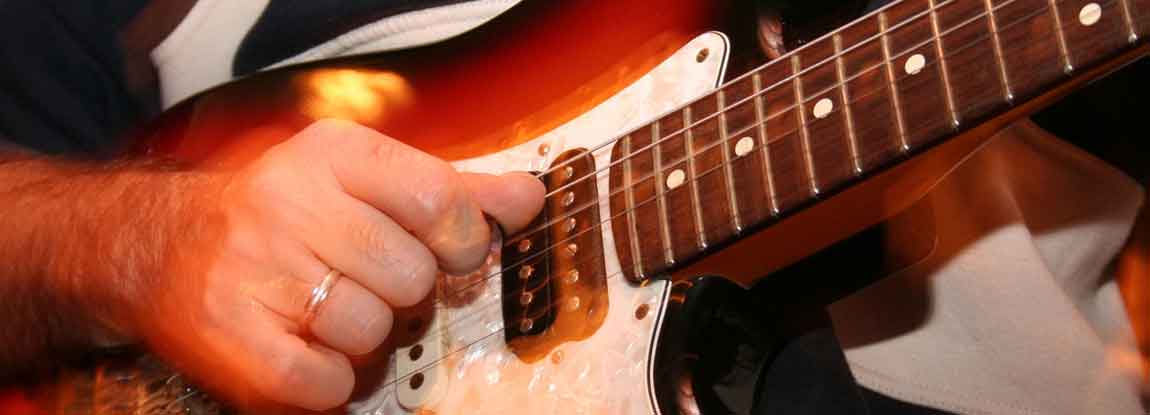




At some point in the past year you have probably heard about space station commander Chris Hadfield, the first Canadian to command the station and also apparently a very good guitar player and singer. His cover of the song Space Oddity by David Bowie has already had over twelve million views on YouTube. But did you know that back in February he did a music education event with the Barenaked Ladies music group of a song called Is Somebody Singing (I.S.S. for short)? His space to earth performance of that song was broadcast in a way such as to allow bands and choirs all over the world to play along with it as a part of what some billed as the world's largest concert. More importantly it was a very novel way to encourage and advocate for music education in the schools. The bad thing though is that if you are like me, you totally missed it!
Not to worry, you can still listen, watch, and perform the piece with your own ensemble, if you know where to look. Read on to find out more and download the music to I.S.S. for use with your own band.

I recently heard some horror stories of a music teacher receiving poor Instructional Practices Inventory scores from the other teachers during weekly observations of the teacher's ensemble rehearsal classes. For those not familiar with it IPI is a method many schools are currently using to evaluate instructional practices in teaching as they relate to students using the higher levels of Bloom’s Taxonomy. If you are already a music educator then you know that what we do is completely encompassed within the top levels of Bloom’s. Music education classrooms consistently use many of the best instructional practices, very rarely sliding down the pyramid of Bloom’s except in pedagogical cases where prerequisite knowledge of music notation and other musical topics is required. When we are performing there are very few other subjects that keep students thinking at the analysis and evaluation levels of Bloom’s as consistently as we do.
This then brings back the question of why on earth was this teacher’s peers grading him in a way that he perceived to be below the true level of engagement? It turns out they were saying that his rehearsals only ranked a 3 or 4 on the scale because they were “Teacher Led Instruction” rather than “Student Active Engaged Learning.” Conversely in another case he was given the highest marks possible when the observers noted that his students (who had not practiced) were essentially sight reading their lesson material. In blessed irony it was decided that that session was scored as being very high on the IPI scale because essentially “they were reading something new for the first time.”
Read more: Instructional Practices Inventory (IPI) Evals vs. Music Education

The concept of the flipped classroom is growing in popularity across the country as more and more schools adopt the common core. While we in music education are probably more "flipped" than most other classrooms we still resort to a traditional model where a teacher essentially lectures, demonstrates, then tells the student to go practice and come back in a week to prove they have learned it. That's not exactly the same thing...
In a flipped classroom the teacher acts primarily as a moderator, providing activities that help the student learn on his or her own. In essence, letting the student teach himself and thereby master the material more fully. How do we break with hundreds of years of tradition and "flip" our music education classroom to be more student centered? For many people it may require that we also flip our expectations of what we need to do in small group and private instrument lessons.

The music of Elgar's Pomp and Circumstance is a staple of American graduation ceremonies. From its permiere the march received acclaim and admiration. It was only a matter of time before the music of Pomp and Circumstance became one of the world's most recognizable melodies.
Also included in this article are links to free sheet music for common concert band instruments for Pomp and Circumstance provided here by MusicEdMagic.com

Finding decent, easy to play clarinet sheet music for free is not as hard as some might believe. The beautiful thing about the clarinet is that it can play sheet music written for almost any instrument as long as it falls within the playable range of the performer. In other words, a clarinet player doesn't have to play ONLY clarinet sheet music. If you are playing solo you can play almost any music that falls within your playable range. Focus on looking for sheet music for instruments that are also pitched in the key of B-flat like the trumpet, or tenor saxophone. Flute or piano music can in some cases can be played on the clarinet, making finding free sheet music a fairly easy proposition if you know where to look.
Read more: Free Sources For Downloading Clarinet Sheet Music

Need a fun, seasonally appropriate motivation tool to help keep your students practicing? Although it works best if you do this during March to coincide with March Madness there's no reason why you can't use it at any time of the year. Special thanks to Elaine Menke, 5th and 6th grade band director at North Polk Community School District for passing this idea along. She uses this tool each year with her students but it works just as well with pianists or almost any music studio setup.
Read more: A March Madness Tournament Style Practice Incentive Idea